


Sharing Culture and Drumbeats: Louisa Sudlovenick Gillespie Gives Back to Community in Resolute
She moved around a lot in her life but her heart stayed connected to her Inuit teachings, her culture and she eventually found her way back home. Louisa Sudlovenick Gillespie is an Inuit artist, drummer, throat singer, performer, educator, humanitarian and elder from Resolute. She is a residential school survivor and an original high arctic relocatee who won the Nunavut Commissioner’s award recognizing her excellence in community service.
Their community’s initial relocation happened when she was a year and a half old so she doesn’t remember that move. Gillespie lived in Resolute until she was 12, when she had to go to a hospital in Edmonton for a year with TB. She went to residential school from kindergarten to grade 8, starting in day school then moving to the residential school in Churchill, Manitoba.
One of the big challenges of the relocation was not knowing the hunting grounds of the area. For the first year or two, gathering enough food was challenging. Returning home where there was no running water or electricity after having that and a warm bed at the residential school was also a traumatic experience, though the government provided more modern homes eventually. They also found the school provided little academic training, rather it provided vocational training so the students could become servants to the teachers and the Southerners moving to Resolute.
Her time in Churchill was a three-year term, the first year acclimatizing to living in buildings, the second year learning to cook and the third year they had the option to go to Fort Smith to get up to grade 10 or to go to a city if they wanted to get their grade 12. Gillespie went to Edmonton, but by then she was 19 and her introduction to the bar scene reduced her interest in going to school. She was not as motivated to put effort into English and she went home to get a job after being introduced to alcohol and marijuana. It’s a common problem she still sees when young people from the North move South, with too much time on their hands.
Her first job after her first year in Churchill was being a secretary for a government official who opened an office in town. Later, she became a school counsellor, but she found it hard to learn how to do her job because the people training her only spoke Inuktitut. Gillespie found her own healing through religion. Before she found healing, she struggled with alcohol and with not having family to teach her to be an Inuk mom. Her husband tried to help her curb her drinking but with their frequent moves, she turned to alcohol to cope. Eventually, they separated and she started going to church.
Becoming God-centred helped her quit drinking. Gillespie also started to learn more about herself as the Inuk woman she was created to be and she spent time with other Inuit who grew up with their parents. In contrast, her mother was in hospital a lot and her father worked to pay for their relocation. In studying the bible, she saw the parallels between its teachings and what Inuit learn from their ancestors.
After Gillespie moved to Ottawa, she connected with Inuit groups and one that met in the evenings that shared Inuit teachings. She realized that fit her best, because her faith and ancestral knowledge were in harmony. “My faith and my ancestral knowledge, what I was being taught was beautiful, and I became more healed during that time,” she recalls.
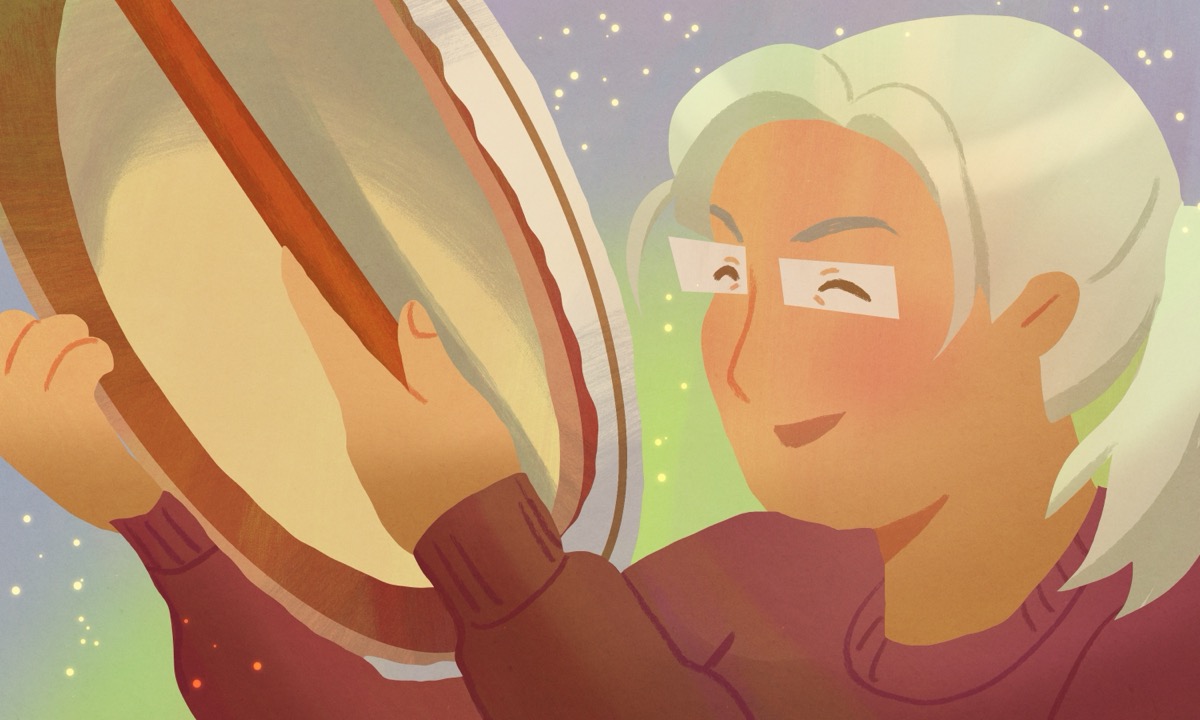
In 2009, in Resolute, Gillespie had the chance to try First Nations drums that were sitting there. After school, she would have a group who were interested in drumming and they learned together to listen to the heartbeat of the Creator through the drums. “I think that drumming, that drumming was a symbol of me, my heart, waking up because I'm still in the process of healing,” she recalls, thinking of how she was taught to hold back her tears and hide her emotions and call that strength. She’s since learned to be vulnerable, to laugh and cry and to allow herself emotions.
If Gillespie could give advice to her younger self she would say, “to listen to my Inuit family more, not ignore them, not brush them off, and find an elder to listen and listen to them.” Looking back, she recalls, “We didn't have many elders here because of relocation, but the oldest ones were very wise, and because of the pain we went through, we became strong, resilient, and if I had listened, they taught me… it's not shameful to cry.”
Her advice for Indigenous students considering going away to further their education would be to ground themselves in Inuit or biblical teachings, to accept themselves for who they are meant to be and not to become like Southerners. “Keep our culture alive as much as possible,” she urges, pointing to the internet as a way to stay connected.
In the future, Gillespie hopes to find a fellow believer who shares her perspective, who is also an Inuk and is knowledgeable about their culture. Last year, she taught drum dancing and throat singing to students in grades 2-5. The cruise ship season has ended but school has started so she will be meeting with the principal to discuss the coming year. She shares with other communities through Connected North as well.
“Improvement is to become the person you are meant to be, not better than anybody else, not worse than anybody else.”
Her advice to young people is, “Find your coping mechanism. Find what you turn to when you're going through a hard time. Don't let it be alcohol or drugs. Look at your culture, look at your parents, look at your ancestors. Remember them? How did they cope before alcohol and drugs? Learn those.” Gillespie also urges them to discover who they are, to learn to use emotions properly and to go find places to scream if need be to let it out. In closing, she says, “Don’t follow the crowd. You could be falling over a cliff. If you need to be with a crowd, then find a group that has the same interests, a similar background.”
Even though she moved around a lot in her life, Louisa Sudlovenick Gillespie’s heart remained true to her Inuit teachings, her culture and eventually, she found her way back home to Resolute. She found her healing through her Creator and through the drums and now she shares her culture with young people in her community, in other communities and with cruise ship tourists. With resilience and strength, she’s learned it’s okay to cry and to be who she really is.
Thanks to Alison Tedford Seaweed for authoring this article.


