


Adventures in Animation: Rachel Corston’s Artistic Educational Journey
At first she hesitated to pursue a career in animation, but she realized it was all she wanted to do. Rachel Corston was born in Moose Factory, Ontario, and lived there until she was six years old. For the next decade, she lived in Thunder Bay while her mom studied to become a teacher. In the summers, they would go home to stay connected to their community. She’s a member of Moose Cree First Nation.
Now a student herself, Corston lives in the Greater Toronto Area where she’s in her fourth year at Sheridan College’s animation program. She’s interested in medical and science communication as well as stop motion video. She’s already completed a Fine Arts Foundation Certificate from Fanshawe College. An animation generalist, she can storyboard, animate, rig characters, and do sound design.
During the summers, she goes home for ceremony and water and land conservation activities. When she has free time during the year, she is at the ice rink and the dance studio. In her first year of animation school, she studied remotely and lived with her grandparents.
Corston didn’t always want to be an animator, because she wanted to make money, but she realized it was the only thing she was passionate about. She went to Fanshawe College at first because of their amazing Indigenous centre. She enjoyed a year of working on art. It gave her the confidence to continue towards an arts-based career. From there, she applied to Sheridan College for animation and was turned down. She worked on her portfolio and was turned down again and applied again. Finally she got in.
Word got out that a girl from Moose Factory was going to Sheridan College and her local hospital invited her to direct a film about heart health for them. She did most of the layouts, storyboarding and scriptwriting.
Later, she made a stop motion film that was successful. Going to Sheridan College has opened many doors for her, though she has met many animators with no formal training who are excelling in their careers.
After her experience at Fanshawe and how supportive the Indigenous centre was, Corston recommends Indigenous students reach out to them. “They're there to help you as an indigenous person succeed in post secondary, because they know how tough it can be transitioning from either like a small indigenous community in a city or like a reserve far up north, and how overwhelming it can be,” she explains, thinking of how many students from those demographics struggle and go back home. “Using those resources can increase your chances of success in post secondary,” she offers.
When it comes to tools beginning animators might consider investing in, Corston recommends the Procreate app to edit images and post them online to start building a community around your art. For 3d work, she suggests Blender to practice modelling and learning how to use it from YouTube tutorials. She doesn’t recommend starting with Adobe Suite necessarily.
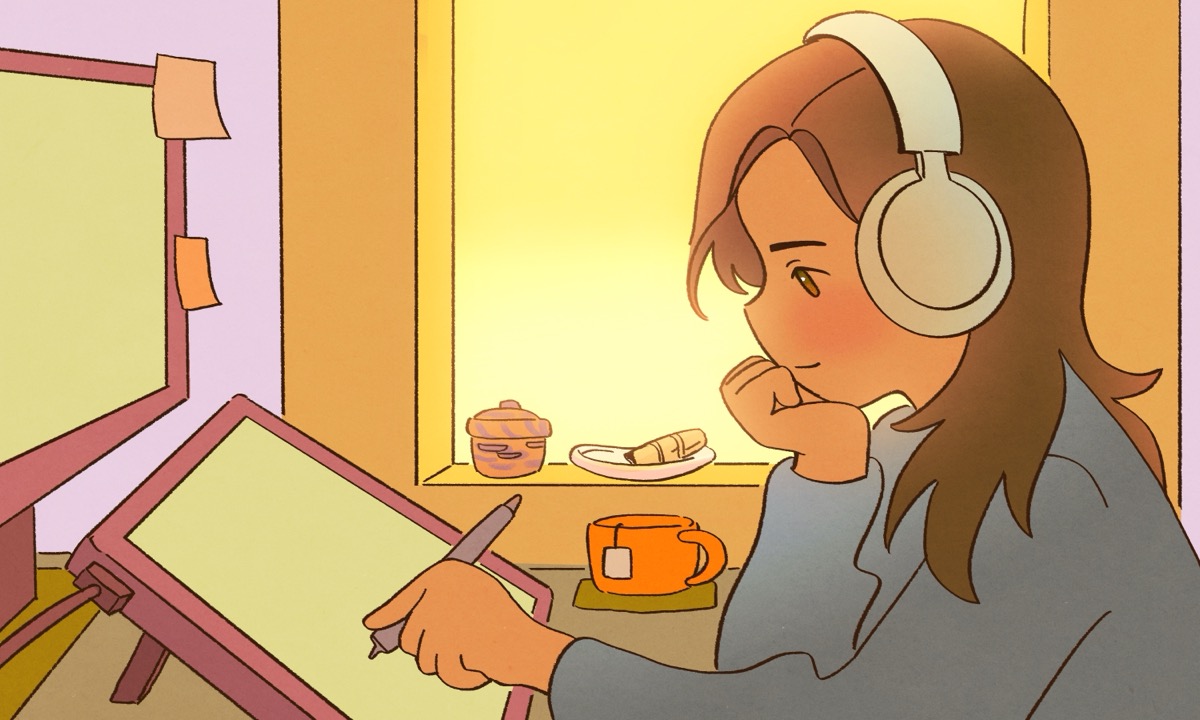
Motivating her are her childhood days watching the Discovery Channel and sitting in on her mother’s classes, learning about the environment and how much it changed, the need to slow down energy consumption, and to value science, sparking her activism. Those core beliefs inform her short film she is making for her fourth year thesis project.
In terms of her informal education, Corston had her practice of creating, seeing and connecting with art. She drew the media she was obsessed with and met artist friends that way. She constantly drew, even if she was drawing badly. She’s also had experiences supporting an event called Gathering of Our People, a community festival in her community where she got to learn from elders. She loves to learn from other Indigenous people about their communities, to attend culture camps and any other cultural experiences she can. Looking to the future, Corston wants to grow her skills as an animator.
Thinking of Indigenous students who may be thinking of leaving their community for the first time, her advice would be, “make the leap, even if it’s scary…experience and education is an investment in your people’s future, specifically your community, not just you. If you’re going to school or getting some sort of beautiful experience in your life, people in your community see that and it’s very inspiring for them to want to do better for themselves.” She notes you can always come back and she recognizes her privilege in having her band sponsor her education. “It's hard being away from home at the end of the day, but there are, unfortunately, more opportunities outside your community,” she confides.
If she could give her younger self advice it would be, “Don't worry about your grades. Worry about developing who you are as a person and enjoying what you enjoy.” Growing up, Corston was competitive about her grades because her family put a lot of emphasis on education.
When it comes to obstacles she has faced, Corston says, “I have a little worm in my brain that tells me I'm never doing enough, and it has gotten me in trouble.” Saying yes to directing a film while being president of student council, doing a full course load and trying to manage her mental health proved to be too much and she failed one of her courses. She ended up having to repeat a year and all her friends graduated without her. She also neglected her mental health. On the plus side, she got to meet and get close to the group of people she did her group film project with, and pursue dance and skating. Spreading her courses over five years made the workload easier, too. “I'm learning now to say no to things sometimes, and it's allowed me to say yes to what I actually want to do,” she reflects.
To balance her mental wellness, Corston makes moving her body non-negotiable. Stopping working out or going to dance or going for walks due to stress or work inevitably leads to more stress and lower productivity. She also finds switching from writing or editing or writing emails to making sets or drawing makes a difference, too.
In closing, Corston hopes to have more Indigenous animators in the world. She recommends the resources BAM Animation on Youtube, which provides high quality free tutorials, and her professor Chris Walsh’s book Stop Motion Filmmaking: The Complete Guide to Fabrication and Animation. She also offered to help any Indigenous people who want to get into animation by looking at their portfolio or helping them get into animation school if they reach out to her.
After hesitating to become an animator at first, Rachel Corston pursued her dream because it was all she wanted to do. Now in her fourth year of animation at Sheridan College, she’s already directed a short film for her local hospital as well as a stop motion film. Spending her summers in ceremony and activism back home, she remains connected to her community and what matters most.
Thanks to Alison Tedford Seaweed for authoring this article.


