


Healthier Together: Susan Shacter Facilitates Indigenous Community Health Research
A lifelong learner, Susan Shacter spends her career learning about Indigenous health and helping others do the same. She is Métis, from a Métis community near Hinton, Alberta. She grew up in Battleford, then lived in BC for a few years before settling in Saskatoon nearly three decades ago. She works with the University of Saskatchewan, with a group that is funded by the CIHR. They do Indigenous health research, and she’s a community research facilitator who works extensively with students and connects researchers with communities. Outside of her day job, she consults with Métis Nation, facilitating engagement sessions, working with elders, and advising on legislation and policy. She’s nearly done her master's degree in Political Studies, researching political trust building for the Métis Nation.
Always someone who loved school, Shacter graduated in 1985 and did her first year of university in 1988 by distance in North Battleford. She studied art and science in her first year then became a hairdresser in BC. She later came back to Saskatchewan and got a diploma in computer information systems at Sask Polytech and worked as computer programmer/network administrator for 15 years. That career allowed her to home school her daughter until high school.
With her daughter off at school, Shacter got a degree in Indigenous Justice and Criminology at USask, graduating 30 years after her first satellite classes. She was just one class short for an Indigenous Governance and Policy Certificate in the Political Studies department and she completed that, too. She went on to do a graduate certificate and then continued on to her Master’s.
Her advice for young people going into post secondary would be, “Take a rest if you need to, but don't quit…I think that far too often in academic spaces, we celebrate successes, and we live in a world where we only post the good things, and we believe that that's what's happening for people, but it's never what's happening for people. You don't get to see what's happening in the background, and it's important for us to share that.” Sometimes taking a break is going for a walk and other times it might be discontinuing a program for a period of time, she qualifies. Shacter also recommends getting connected early with staff at the university and getting learning disabilities diagnosed in advance where possible.
To take care of herself, Shacter takes breaks. She’s also learned not to start serious conversations late at night. If she hits roadblocks when she is writing a paper, she knows she needs to sleep or see her family, even if it means handing a paper in late. She’s found she’s smarter in the morning. Trusting her brain is another thing she’s learned, as well as trusting the process and waiting for the next day to re-read things and see if it makes more sense if at first it doesn’t. “Tomorrow’s always a better day” she reassures. She tries not to take things too seriously, to find people who are fun and get involved in her community.
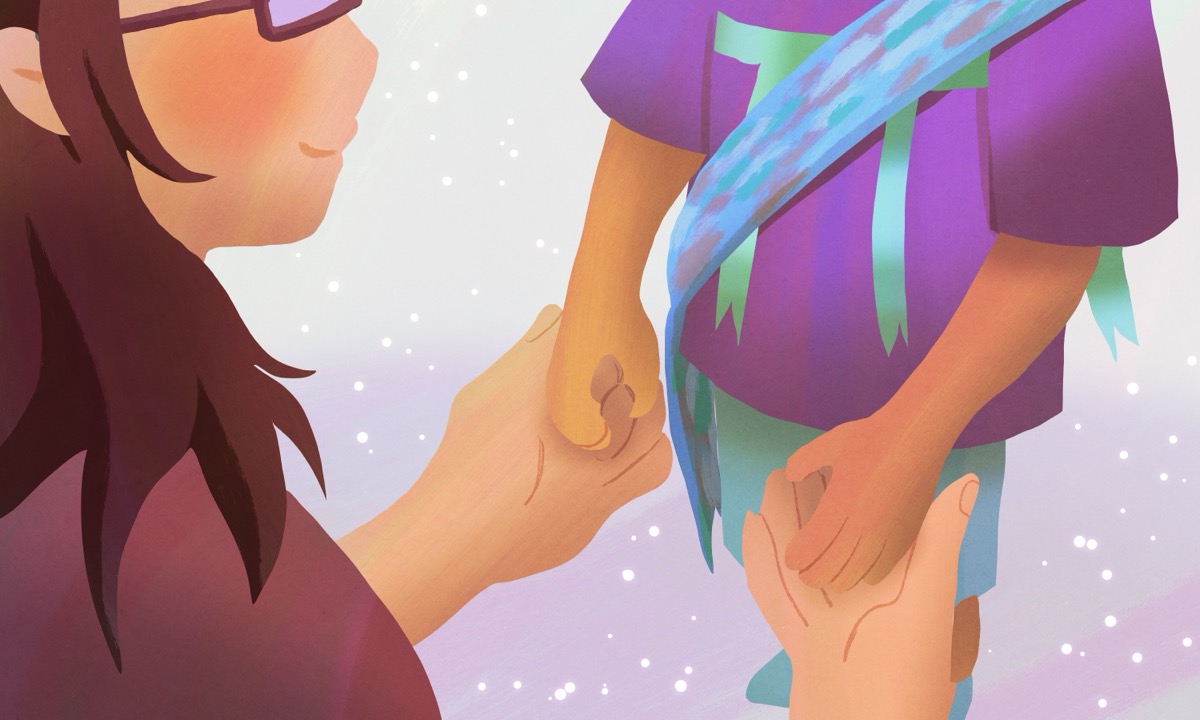
Her mother’s best advice to her was very much the same, tomorrow is going to be a better day and you just keep going and if you want to do something you just do it. She recalls how her mother would tell her, “Maybe you'll fail, but you'll maybe come back and try later, and maybe you'll learn something along the way that this is a better fit for you. But don't let people tell you that you shouldn't be there. Don't let people tell you that you can't do it. Believe in yourself. If there's people telling you those things, find some other people… You don't want to be in the spaces where people don't notice you, don't remember your name, don't have your back, aren't giving you the opportunities, because those are it. It's never going to change. So find those spaces where you feel supported, where you feel loved, where you feel like people are giving you opportunities but also challenging you, because we want to be challenged."
If she could give her younger self advice it would be to finish her degree and to stop dragging it out so long. What Shacter found along the way is that honours degrees and degrees with distinction are not necessarily required if you’re going into your master’s degree.
Celebrate your success along the way.
Shacter also realized she needed to be brave and say what she needed to say even in situations where she felt she didn’t have enough power, even if it meant losing a job so that she could stand in her integrity and stand up for herself, her morals and values. “It might shift things, but you're going to be in a space where you get to be true to who you are, and that's the growth,” she shares. Simultaneously, she knows to pick her battles so she can pay her bills, to take turns with others doing hard things, calling out power, and exposing truths. She knows to share her privilege and power with others who need it. Working as a team as a waitress, cook, janitor and dishwasher at her favourite job is one of her fondest memories, with everyone pitching in to get the job done.
Studying Indigenous health as a lifelong learner, Susan Shacter spends her career helping others do the same. It took her thirty years to get her bachelor’s degree but she followed her own advice, take a break but don’t quit. She’s been a waitress, a hairdresser, a network administrator and now a community research facilitator and each twist and turn in her career path brought something important to her life.
Thanks to Alison Tedford Seaweed for authoring this article.
September 2026 Updates: Susan has now completed her Master's in Political Studies. Her thesis focuses on political trust-building for the Métis Nation. Like her undergraduate degree, it took her a long time to complete her Master's because she was working and had many other life responsibilities. It took her five years to complete, but she is very happy with the results! She wants to remind all young people that there is no "right" timeline - take your time and carve out your own path. She will graduate in November of this year.


