


Creativity from Curiosity: Tristan Taparti Shares His Professional Artistic Practice
“Nothing that I draw looks like what it should look like. I don't draw a feather, I don't draw a wing, but when you look at it, it's purely a bird,” Tristan Taparti explains. He is a third-generation Inuk artist from Rankin Inlet who grew up fifty feet from the Matchbox Gallery, an international art gallery and he, his mother and grandmother have all been professional artists. His mom met the Queen as a tour guide in a sculpture garden in Iqaluit when he was five years old. He started getting serious about his craft in his late teens, selling his drawings when he was 19. He took a break for a while, then picked it back up and has been teaching art lessons through Connected North.
Motivating him towards creating art is a combination of boredom and curiosity. First doodling in the margins of his school books during quiet moments, now Taparti’s scrolling through Pinterest for inspiration from shapes and animals sparks his free form and flowing art style. His art was refined through practice without any formal training, though he has studied things like colour theory on his own out of curiosity and to ensure his expensive painted miniatures for a game he enjoyed looked good. He also studied why certain characters were shaped differently in pop culture.
His advice for Indigenous students thinking of leaving home in pursuit of training and opportunities would be, “Don't be afraid to feel stupid, you're going to ask questions that people may have never yet thought to wonder about…asking is completely fine. You're going to panic, you're going to feel dumb, and you're going to have an awkward adventure, but at the end of the day, you'll know more, and you'll have learned something.”
When it comes to obstacles, Taparti struggled with standing out in a crowded market, having to find his own niche. “Find something that you enjoy, find something that you find interesting and explore all of that. Find flexibility. From a single straight line, you’re not going to learn much, but learning how to put those straight lines together helps shape whatever it is that you’re drawing,” he urges. Not one to incorporate straight lines into his own designs, his art is a compilation of curved lines and shapes.
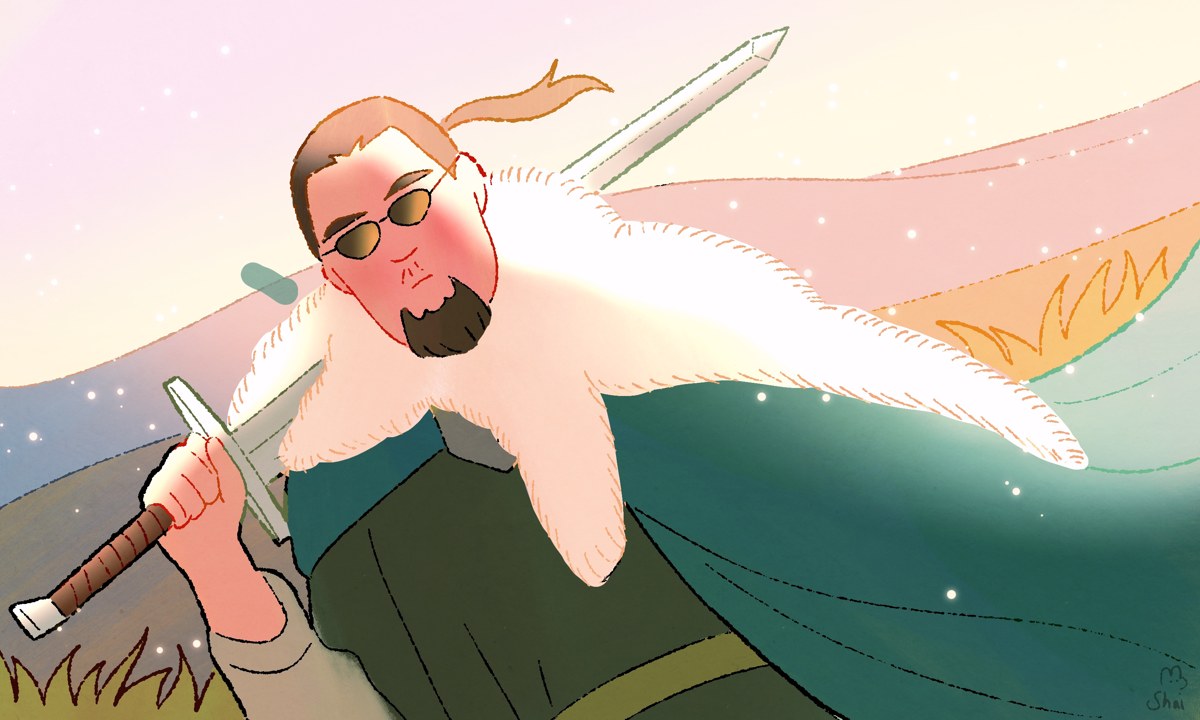
Finding his own style took determination and exploration. Taparti struggled with some imposter syndrome, growing up with his talented mother and aunt who came third place for a national art award and feeling like he was never living up to their artistic standard. He recommends not putting pressure on yourself to excel quickly. He lives by the adage that it takes 10,000 hours to become excellent at something. He recalls how the wooden sword he received for his birthday when he was five became a large part of who he is, a martial artist and swordsman, prompting him to learn global philosophy.
In addition to sculpture and painting, Taparti sews, draws, practices martial arts and theoretical arts like reading tarot and philosophy. He carves to make jewelry, too. His main tools for creating art include pencils, something to make marks you can erase and a knife, to alter the shape of things like stone, wood, or fabric. His more modern tool would be google drive. With the long winter, he has plenty of time to practice his artistic pursuits.
To balance his mental health and wellbeing, Taparti likes to follow through with his ideas. In terms of what makes him happy, spending time with friends, sharing ideas and hearing their perspectives brings him joy. Thinking back to when he was young, he wishes he had received encouragement on his creations.
To those inspired by his journey who would like to follow their own artistic path, Taparti says, “if you find something shiny, be a bird, take it.” For Taparti, those shiny things have included mythology, history, philosophy, martial arts and his tendency to always be in motion. He loves the writings of Miyamoto Musashi and Neil Gaiman. Another piece of advice he shares is "Take in that which helps you, strip away that which holds you back, strike out ultimately with what is you", his take on the leading principle of Jeet Kune Do.
Continuing a family tradition of making art, Tristan Taparti spends the long winters crafting what inspires him in his Rankin Inlet home. A third generation Inuk artist who honed his craft through self-study and experimentation, he’s sharing his knowledge through art classes online. Curiosity and boredom have inspired his creations alongside a commitment to putting the hours in to be excellent.
Thanks to Alison Tedford Seaweed for authoring this article.


