


Grappling with Grace: Thomas Barreiro Shares His Love of Sport
“Everybody has a gift athletically,”declares Thomas Barreiro. He is from the wolf clan, a Mohawk man from Akwesasne. The community is in Ontario, Quebec, and New York State. Outside of work he likes to play video games, card games like Magic the Gathering, role playing games like Dungeons and Dragons and spend time with his family.
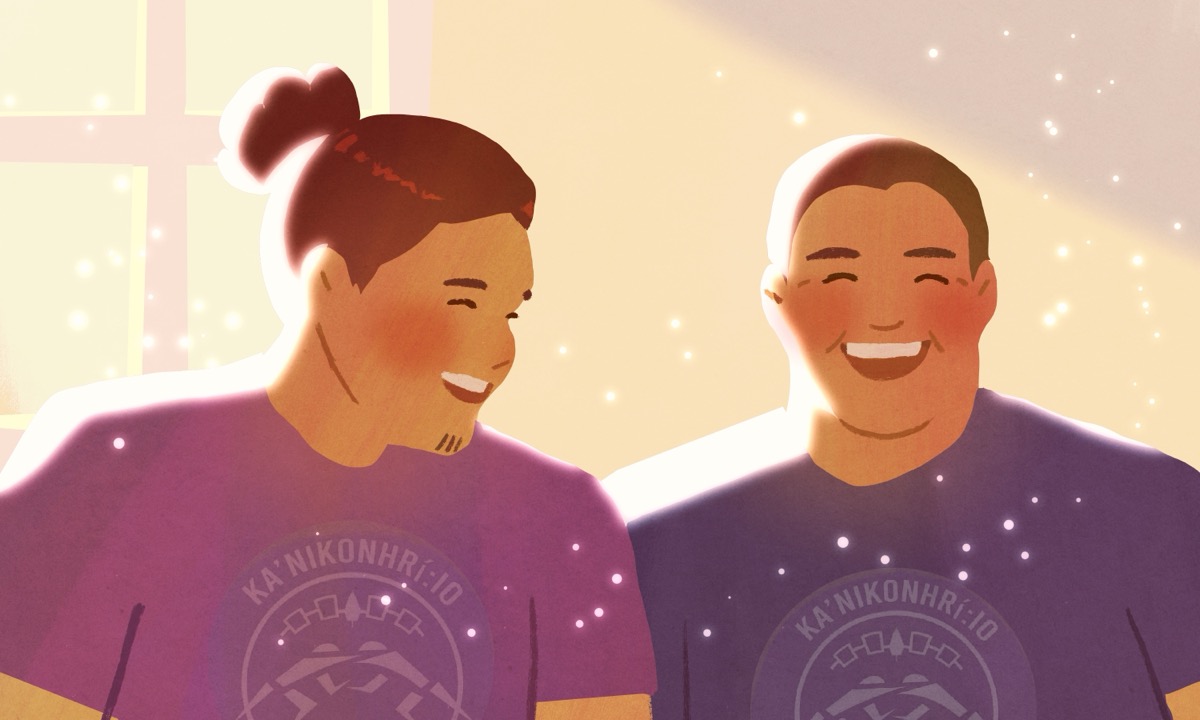
His first job out of college was working as a diabetes educator for the Akwesasne Boys and Girls Club, then as their branch manager, managing three clubs on the Canadian side of the reserve. Ten years later, Barreiro resigned and now he heads up a nonprofit called Good Mind Grappling, along with his brother and others, where they provide free wrestling, grappling and other movement training like gymnastics. They also play rugby. “Our goal is to use sport as a modality to build community as well as address intergenerational trauma. A lot of the outcome of the intergenerational trauma experienced by our communities is disruption in kinship ties and community bonds, and so one of the ways that we try to address that is by bringing the people together in a fun, positive way so that they can build those kind of bonds and Community,” he explains.
“The sport that I know is wrestling, how it can help build resilience in young people.”
Barreiro is a six time Canadian national champion who won the Canadian Olympic trials in 2019. He’s been wrestling for 25 years now. He represented Canada at the World Championships three times and at the Pan American Games in 2019. His brother is a three time champ who has coached at Division One levels in the States. In 2023 they were both inducted into the North American Indigenous Athletics Hall of Fame in Wisconsin. They’ve also been active in Judo and Jiu Jitsu.
Growing up, Barreiro’s father was a professor at Cornell in Indigenous Studies and his mother was an Aboriginal midwife who helped found the midwifery center in Six Nations. He and his twin brother were initially encouraged to play lacrosse but they weren’t very good and they hated it. They were bullied a lot for their long hair but he and his brother would beat up the bullies. One day one of the bullies suggested they try wrestling and they fell in love with the sport. The second year his brother made the varsity team and he made the team at the end of the year. His coach, a division three national champion out of Ithaca College, connected with him and helped him stop fighting outside the ring. His parents moved to Washington DC for Work and they went to live with their sister and other family. They wrestled at Messina and his brother was a two time Indigenous Games champion. They both wrestled Division one in college and he ended up burnt out by the time he graduated.
When he was working at the Boys and Girls Club, their older brother asked if they could work with an up and coming wrestler who was 15 years old. They came to work with him and while he was running sprints, he disclosed he had been up drinking all night. They decided to wrestle him anyways and he learned not to do that. From there, they mentored him for years, training with him at the Boys and Girls Club, taking him to Montreal to train with a coach who was a five time Olympian, Canadian Hall of Famer. They helped him with his homework until he graduated high school and he was a Canadian National Junior Champion in Greco, silver in Freestyle, pan-American Greco Roman champion and one match away from being All-American in the folk style nationals in the states when he tore his ACL. He graduated from university and works as an electrician, has a wife and child and a job, the first in his family to graduate, inspiring his mom to go back to school and eventually get her masters and his brother has his degree. He wondered what would happen if he put effort into more than one kid and Good Mind Grappling is the result.
Some of the obstacles they’ve faced have included the toxicity of youth sports, when parents push very young children to be elite athletes. With too much pressure, kids don’t connect with the sport and lose their inner motivation to compete. Needing to raise the profile of wrestling as a sport in their area is also a challenge given its lack of popularity in the area. Something Barreiro loves about wrestling is how inclusive wrestling is, and he says anyone can be successful, pointing to an Arizona State wrestler who only has one leg but was a national champion. In combat sports culture, there can be a lot of misogyny and reluctance for women to get involved, but there is 48% female participation in their programming. A lack of equipment and space was an issue for some time, but they overcame it through grant funding so they can offer access to participants free of charge. “I don't want there to be barriers for people to experience their body and to build a relationship with their body,” he explains.
“That's what being Indigenous is, is community.”
When it comes to inspiration, Barreiro looks to places like the Cambridge Bay Wrestling Club, who are using grappling and other sports to address the suicide epidemic. He thinks about his parents who have been involved in activism for a long time, having met out of the American Indian Movement, Wounded Knee in 1973. They raised their children with the expectation they would be excellent, that they should grow to help others and with a vision of mutual support.
For those considering wrestling, Barreiro’s advice is to have a positive relationship with failure and to know how to get support and seek help when you fail. He doesn’t support the methods of coaches who berate their athletes when they fail.
When lacrosse didn’t work out for Thomas Barreiro, he found a sport he fell in love with: wrestling. A decorated champion in his glory days, he’s now spreading his love of wrestling with his community, alongside his brother, working to address intergenerational trauma. Providing free athletic programming for everyone who wants to engage, two wrestling champs tackle a need for community together.
Thanks to Alison Tedford Seaweed for authoring this article.


