


Research on the Land: Kathy Snowball Aputiarjuk Creates Change Through Science
“I want to create change. I want to do something for the land that has helped me grow and I want to have a positive impact on the land that I grew up in,” shares Kathy Snowball Aputiarjuk. She lives in Kangiqsualujjuaq, the most Eastern community in Nunavik, which is Northern Quebec. She’s lived there all her life, outside of occasional trips to and a short time attending school in Montreal. “The land and home just kind of kind of pulled me back home, which is one of the best decisions I've made,” she reflects.
As far as her professional life, Aputiarjuk’s always been interested in the sciences and when she was young was invited to go to Students on Ice, a research program which explores the North, sparking the researcher in her. “Looking into microscopes during Students on Ice interested me so much. There's more to life than what I see,” she explains. She went from Greenland to Nunavut and got to stop at communities along the way. What she found most striking was the lack of trees given she lives in a community on the treeline and so there are trees but Greenland and Nunavut have no trees at all. Later, she got involved in a youth research camp collaborating with the University of Laval on arctic char research related to climate change.
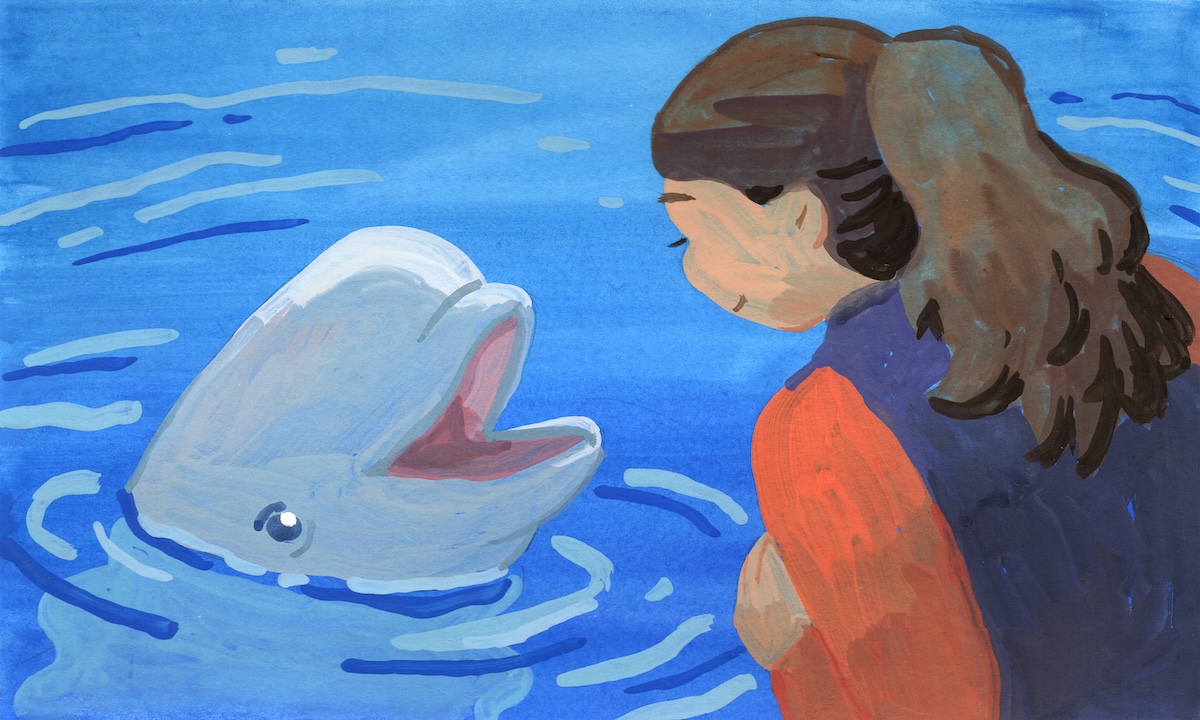
Now, Aputiarjuk works for a non profit called Anguvigaq. She was hired to be a research assistant about belugas at first. Every summer, the belugas go into rivers that are otherwise closed off by ice and the organization conducts research. She was also hired on contract with a movie for her musical talents. Anguvigaq hired her permanently as their communications director and she got to go back to the research camp. This year she had the chance to go back to Students on Ice as an educator to go from Nunatsiavut to Nunavik but their ship had engine problems so they didn’t get to leave port.
In terms of her education journey, Aputiarjuk decided to go to Nunavik Sivunitsavut, a program that partners with John Abbott College in Montreal. She had the chance to learn the politics of her culture, how Nunavik came to be, the Inuktitut language, drum dancing and songs she connected with spiritually, throat singing, humanities and English. “It was overall a great experience, even though there were some challenges, but I surpassed those challenges, which just feel like made me more knowledgeable and strong, even though I still have a lot to learn,” she reflects.
Her advice to Inuit youth leaving home to pursue their dreams is, “Leave home, you can definitely go back home, but give yourself a chance to experience this college life…. I very much recommend going to college at least a year, or a few months because I find that living down South opened my mind, opened my vision so much.… I recommend getting out of your comfort zone, because you'll see that there's so much more to life than just staying home, even though it’s the best thing in the world.”
When it came to obstacles, Aputiarjuk struggled with the volume of work she had to do in Nunavik Sivunitsavut compared to high school. Eventually she realized she had to do one thing at a time. Breaking things up one sentence, one paragraph at a time made things more manageable. Just doing one thing helped her overcome procrastination. Having a healthy hobby like playing music helped her cope with being away from home and she would bribe herself with walks around the city and going to the movies when she was done all of her assignments.
If Aputiarjuk could share a message with a younger version of herself it would be “appreciate where you are, just don't take anything for granted, all of these don't always happen. Stop being shy. Talk to people… Just start with a ‘hi!’” Thinking back to her Students on Ice experience, it was a once in a lifetime opportunity and she was so young, she learned after to embrace herself and have confidence in herself knowing she’s unique. Her grandmother used to tell her, “Hey, you're doing it, and nobody else is doing it. If they want to make fun of you, let them because they're not in your shoes, and you're not in their shoes because you're actually doing the thing that they wanted to do.”
To balance her mental health and wellbeing, Aputiarjuk plays the guitar and sings her feelings out. She also goes outside for fresh air, walking around and spending time on the land. Sewing is also helpful, making clothing. She likes to do cultural activities. Spending time on her own, doing breathing exercises and listening to music helps her recharge.
As far as inspiration goes, Aputiarjuk lives in a matriarchal household, where the women are always doing things, preparing food and cleaning up, preparing country food. She always wanted to be the woman in her household like her mother, grandmothers and aunts. She also looks up to musician Beatrice Deer who helped her create her own EP and Sylvia Cloutier who involves her in performances.
Being outside on the land inspires her, seeing what her ancestors survived through and lived by the seasons, inspiring her to say, “I’m still here” - despite harsh climate, colonialism and trauma, she and other Inuit are still healing through it. “It inspires me so much to spread positivity, because I’m still here,” she beams.
Wanting to create change and do something for the land that has helped her grow, Kathy Snowball Aputiarjuk works with a nonprofit called Anguvigaq. Her interest in research was first sparked by her experience with Students on Ice, stoked by a research camp and sustained in her work with Anguvigaq, but she’s always been interested in the sciences. No matter what, the land and her home keep pulling her back and she knows it’s the best choice she’s made to return.
Thanks to Alison Tedford Seaweed for authoring this article.


