


Designing Her Own Future: Graphic Designer Katie Wilhelm Creates Applied Art As An Entrepreneur
“It's okay to be early on your journey,” says Katie Wilhelm. She has spent years working in corporate communications. She has previously focused on local economic development and now owns a successful design and consulting business as a certified Registered Graphic Designer through the Association of Registered Graphic Designers. She lives in London, Ontario but her family is originally from the Chippewas of Nawash First Nation. She was named as a 20 Under 40 recipient by London Inc magazine. When she’s not working, she loves to create art, painting and drawing, and she likes to go to museums, galleries and community events. Her paintings are abstract and she’s exploring watercolour and she also plays the saxophone.
When it comes to her business, she has been operating for twelve to thirteen years and she specializes in print design. She creates many annual reports, billboards, and pamphlets but also websites, brand and logo designs. She is a board director with the London Chamber of Commerce, with the Grand Theatre and a committee member with the EQAO on their First Nations Collaborative Council.
She was inspired to pursue this career when she was designing the yearbook in grade 12 and the teacher suggested she apply for graphic design school and she didn’t know what graphic design was. She also built websites for her friends’ and her brothers’ bands in high school. For Wilhelm, it was a way to do applied arts, to be creative for a living, to always be doing something new and creating something new every day. She was able to get in on the January intake for graphic design school and continue using the design programs she had discovered and was really good at.
To pursue her dream, Wilhelm went to Fanshawe College for a three-year program in London, Ontario. She made a lot of friends, made valuable industry connections and there were opportunities to be connected with actual jobs.
When it came to obstacles, Wilhelm shared her journey toward understanding money. She has struggled to value her work, to ask for money, to manage it, to understand wealth, and to take care of herself so she could earn. She also faced judgment and prejudice as an Anishinaabe person. Going back to her teachings and back to the basics in their wisdom is how she overcame many obstacles.
Her advice for Indigenous people considering pursuing a career in graphic design is that there is no shortage of work in the field. “Everybody needs some piece of something graphically designed, even in this day of AI. That human touch and that piece that we bring as people, as humans, is still so very needed by people in the world,” she reassures. Getting started through online education is one way to get started. She also suggests not comparing yourself to others, especially to those further along in their journey.
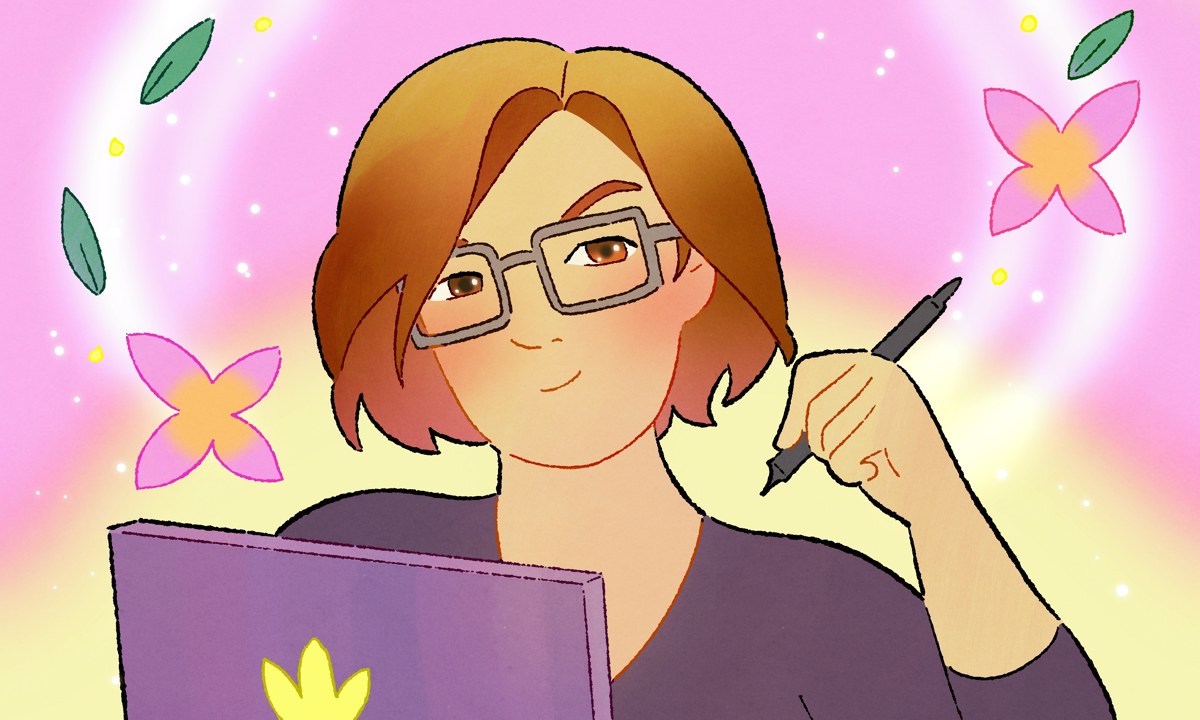
Her other advice is “There will be failure. But if you fail faster, you'll learn quicker. So fail as fast as you can, especially when you're young.” Wilhelm maintains a “failure resume” where she puts anything she has considered a failure and she’s seen how she’s addressed weaknesses over time with strengths. The inventory has helped her build trust in herself and helped her learn from her mistakes.
“I also wish somebody told me it's okay not to know. You can always say, ‘that's a great question. I'd love to get back to you’. It's okay not to know the answers to things,” Wilhelm confides. She recalls how she felt like she had to know everything when she first started, like she had to be an expert.
To maintain her mental health, she maintains an artistic and creative practice just for fun, separate from what she does for ower. She loves to play music and to dance just for the love of it. She also loves to read and to write bad poetry. She practices integral breath therapy and tries to get movement into her day however she can.
As far as inspiration goes, Wilhelm says “everywhere is a source of inspiration”. From nature to packaging of things, to talking to and meeting new people out in the community, the sources of inspiration are neverending. Even just laying back and looking at the clouds can spark inspiration for her.
Looking a few years into the future, Wilhelm hopes to be doing more public speaking and facilitating panel discussions. The message she hopes to share with Indigenous youth is “Your voice is so important. More than ever. You are so valued. The artwork that you put forward, whatever medium that happens to be, is so valuable. Your voice is important. So share it through art. Share it.”
Designing brands and print designs, Katie Wilhelm practices applied art, making creative things every day. Learning from mistakes and gathering inspiration from everywhere, she has built a business for over a decade that has taught her so much. She didn’t know what graphic design was when it was first suggested to her but now she is shining as a certified Registered Graphic Designer and entrepreneur.
Thanks to Alison Tedford Seaweed for authoring this article.


