


A Culture of Sharing: Sharon Nahanni-Allen Pays Forward Life’s Lessons
“I like to teach others my language, culture and everything I learned throughout my life,” Sharon Nahanni-Allen explains. Her family came from Ka'a'gee Tu, Tulita and Pedzéh Kı̨́. She grew up in Tthek'éhdélı̨ with her godparents who adopted her and she also lived in Fort Simpson with her biological parents, aunts and uncles. She has a positive relationship with her mother despite the adoption.
In her twenties, Nahanni-Allen worked in the healthcare field, because she spoke two Indigenous languages and interacted well with elders. After she had kids, she went back to school to get her bachelor’s degree. She taught ten years in languages and regular K to 12 classes. Now, she works as a career development officer, helping people find work and educational opportunities. She enjoyed working in healthcare and she loved the opportunities teaching provided, getting to help the children and parents. In her current role, she helps with translation and interpretation, giving her the opportunity to speak her languages.
Nahanni-Allen is an intergenerational residential school survivor and she went to residential school herself. She left school at a young age but went back as an adult while raising her five kids. She credits her family for motivating her more and making her want to show that she can have positivity in her life and she can do anything. She also won many scholarships and started a culture room, became a culture room coordinator and then a classroom representative. She had many roles as a student teacher and volunteered a lot. She specialized in Native Studies and minored in English.
One of Nahanni-Allen’s sons is now a pilot, another is in the military. One of her daughters she lost to a drunk driver at the age of 16. Many people thought she would quit school after such a heartbreaking loss but she signed up for more classes, determined to finish and give her kids a solid foundation. She wanted to be able to support their dreams and her kids motivated her to keep going. Later, she lost a niece she raised at the age of 19. She prays for the girls she lost and honours the time she had with them, knowing they are in good places and remembering the good times. She also has the support of friends who have also lost children and she supports them, too. She keeps moving to avoid addictions and being stuck.
On days she didn’t want to continue, she looked to the example of her ancestors and her godparents. She thought about the starvation her people endured and kept going. “It’s easy to give up, but we all have a choice and that’s the message that I always give to people,” she reflects. “Even though things were so hard in our past, we are still living ... .we're still here,” she continues. While her parents attended residential school, her grandmother didn’t, something she considers a blessing.
Her advice for Indigenous students who have to leave their home communities to pursue their education is, “Take the chance to explore what you may be capable of. We're all capable people.” As a teen, Nahanni-Allen had a chance to live with relatives in Montreal and have the positive influence of her cousin who was pursuing her Master’s degree. Moving to Montreal as a small town girl was a big shock but her family helped her get through it. Eventually, she came back home to share her language gifts with her community. “Our people are just natural sharers. We just want to share our knowledge. We just want to share everything we know and understand,” she explains, thinking of how good she feels when she helps others.
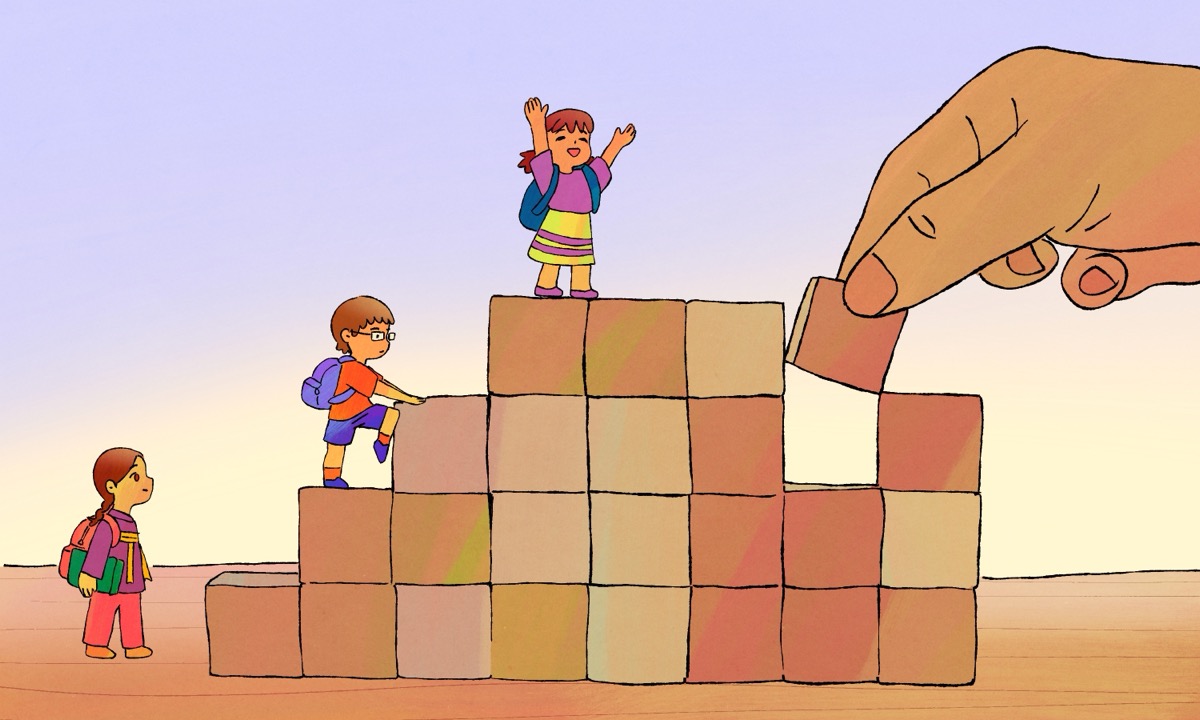
If Nahanni-Allen could share a message with her younger self she would say, “I'm Dene, proud to be who I am despite what things are ahead of you, and you have to face your fears and live your life dreams and achieve your goals according to the teachings of your ancestors, and just be honest with yourself through that journey.” What she and her husband taught their kids is to assess if something is good for them before doing it and that they would do their best to support them in what they want to do.
“I think parents need to let their kids spread their wings and experience all the things that they need to experience when they're away from their family, because that's how we learn, and that's how we come to be who we are as people,” Nahanni-Allen reflects. She recommends letting kids fail when they are younger and letting them decide what to do about it.
Looking back, Nahanni-Allen recalls how some people might have seen her people as poor but she felt rich, surrounded by pelts and hides, learning to fix nets, and paddle the McKenzie River with her dad. Her godparents passed away when she was young, just 15 and 23, but she got through life with the help of her aunties. She recommends having a good support system in place and male role models like her uncles.
To maintain her mental wellbeing, Nahanni-Allen practices spirituality daily, praying or doing yoga every day, practicing gratitude every day. Physically, she exercises, walking every day, skiing, boating and spending time on the land. Emotionally, she tries to stay positive and fill her cup with positive things as much as she can. She thinks good thoughts, practices art and tries to stay in balance with the medicine wheel. After losing her daughter, she participated in trauma-informed healing. Yoga, walking in nature, expressive arts, spending time with her dog have also been therapeutic.
In closing, Nahanni-Allen acknowledges both sets of her parents, the good role models she had, and the ladies who helped her as a teen so she can live in gratitude. She loves sharing what she’s learned and feels society doesn’t share enough and people aren’t honest enough with themselves, hindering their ability to be honest with each other.
She loves to teach her language, culture and life lessons, giving back freely of what she has been taught. Sharon Nahanni-Allen has worked in education, healthcare and now she’s a career development officer, helping people at each stage in some way. She’s faced tremendous loss but found her way through and extended a helping hand to those who know the pain too well. Sharing is caring and she cares a lot.
Thanks to Alison Tedford Seaweed for authoring this article.


